
Engaging students from the start is crucial; these quick activities, often found in PDF resources, foster a positive learning environment. These 5-minute routines, like debates or category listings, prepare minds for focused lessons.
The Importance of Starting Lessons Effectively
Beginning a lesson with a well-chosen warm-up, often sourced from readily available PDFs, significantly impacts student engagement and learning outcomes. Those initial 5 minutes set the tone, shifting focus from prior activities or external distractions to the current subject matter. A strong start encourages participation, builds rapport, and primes students’ brains for optimal information absorption.
Effective warm-ups, like quick riddles or “Two Truths and a Lie,” can also subtly assess prior knowledge, allowing teachers to tailor instruction accordingly. They create a welcoming and inclusive atmosphere, particularly beneficial for new students or those hesitant to participate. Ignoring this crucial phase can lead to disengagement, lost instructional time, and a less productive learning environment. Prioritizing these brief activities is an investment in overall classroom success.
Benefits of Short Warm-Up Activities
Implementing concise, 5-minute warm-ups – easily found in numerous PDF resources – yields substantial benefits. These activities encourage student participation, fostering a more dynamic and interactive classroom environment. They serve as excellent “brain starters,” activating cognitive functions and preparing students to absorb new information more effectively.
Furthermore, short warm-ups, such as category listing or mini-debates, can improve classroom management by establishing clear expectations and routines from the outset. They provide a low-stakes opportunity for students to practice communication and critical thinking skills. These activities are particularly valuable for integrating new students, helping them acclimate to the classroom culture. Ultimately, these brief exercises maximize instructional time and enhance the overall learning experience.

Types of 5-Minute Warm-Up Activities
Diverse options exist, from brain teasers and quick writing prompts to pair-share discussions and movement-based exercises, often detailed in PDF guides, for engaging students.
Brain Teasers and Riddles
Brain teasers and riddles serve as excellent cognitive warm-ups, stimulating critical thinking and problem-solving skills within the first few minutes of class. These activities, frequently found in readily available PDF resources, require minimal preparation and can be adapted for various age groups and subject matters.
They encourage students to think creatively and outside the box, fostering a playful yet intellectually stimulating atmosphere. A quick riddle can instantly grab attention and shift students’ focus from external distractions to the task at hand. The concise nature of these puzzles – easily completed within a 5-minute timeframe – makes them ideal for initiating lessons.
Furthermore, successful riddle-solving boosts confidence and encourages participation, setting a positive tone for the remainder of the class period. Many online databases and printable PDFs offer a vast collection of age-appropriate brain teasers and riddles.
Quick Writing Prompts
Quick writing prompts are versatile 5-minute warm-ups, easily accessible in numerous PDF formats online, designed to ignite creativity and assess understanding. These prompts encourage students to articulate thoughts rapidly, focusing on fluency rather than perfection. They can range from imaginative scenarios – “What if you could fly?” – to reflective questions – “What was the best part of your weekend?”
The beauty of these prompts lies in their adaptability; they can be tailored to any subject, reinforcing concepts in a non-threatening way. A history prompt might ask students to write from the perspective of a historical figure, while a science prompt could challenge them to explain a complex process simply.
These activities are particularly beneficial for reluctant writers, providing a low-stakes opportunity to practice writing skills. Many PDF resources categorize prompts by grade level and subject, simplifying lesson planning and ensuring relevance.
Pair and Share Activities
Pair and Share activities are collaborative 5-minute warm-ups, frequently detailed in readily available PDF guides, promoting active learning and peer interaction. These simple exercises involve posing a question or problem, allowing students a brief period to formulate individual responses, and then sharing their thoughts with a partner.
This method encourages all students to participate, even those hesitant to speak in larger groups. Examples include asking students to share one thing they learned yesterday, or to brainstorm possible solutions to a hypothetical scenario. The focus is on communication and building confidence.
Many PDF resources offer structured “pair and share” prompts aligned with specific curriculum areas. These activities are easily adaptable for various age groups and learning styles, fostering a supportive classroom environment and preparing students for more complex discussions.
Movement-Based Warm-Ups
Movement-based warm-ups, often outlined in 5-minute activity PDFs, are excellent for energizing students and improving focus, particularly after periods of inactivity. These activities integrate physical activity into the learning environment, catering to kinesthetic learners and releasing pent-up energy.
Simple examples include “Simon Says,” quick stretches, or a brief classroom scavenger hunt. These exercises don’t require extensive space or equipment, making them easily implementable. They can also be themed to connect with the lesson content, reinforcing learning through physical association.

PDF resources frequently suggest variations for different age groups and classroom sizes. Incorporating movement can significantly enhance student engagement and create a more dynamic learning atmosphere, preparing them for focused academic work.

Specific Activity Examples
PDF resources detail activities like “Two Truths and a Lie,” category listing, and mini-debates, all designed for quick engagement. These 5-minute options boost participation!
“Two Truths and a Lie” Icebreaker
This classic icebreaker, readily available in many 5-minute warm-up PDF guides, is incredibly simple yet effective. Each student shares three “facts” about themselves – two true statements and one lie.
The rest of the class then attempts to guess which statement is the fabrication. This activity encourages active listening, critical thinking, and helps students learn about each other in a fun, low-pressure environment. It’s particularly useful for new students, fostering a sense of community and easing anxieties.
Preparation is minimal; no materials are strictly required, though students might jot down their statements beforehand. The teacher facilitates, ensuring everyone participates and respectfully challenges guesses. Adaptations include thematic truths related to the lesson topic, adding an academic twist.
Category Listing Activity (3 examples per category)
A versatile warm-up, often found in PDF collections of 5-minute activities, involves presenting students with categories and challenging them to list three examples for each. This boosts brainstorming skills and quick recall.
Categories can be broad – like “types of animals,” “colors,” or “countries” – or more specific to the subject matter. Students work individually or in pairs, writing their lists within a set time limit. This activity encourages participation from all students and can be easily differentiated by adjusting category complexity.
The teacher then facilitates a brief sharing session, highlighting diverse responses and clarifying any misconceptions. It’s a fantastic way to activate prior knowledge and prepare students for the lesson’s core concepts. Minimal preparation is needed – simply pre-select the categories.
Mini-Debates (2-5 minute format)
Found within many 5-minute classroom activity PDFs, mini-debates are a dynamic warm-up. Present a simple, age-appropriate statement – for example, “School uniforms are a good idea” or “Reading is better than watching TV.” Divide the class into “for” and “against” teams.
Allow a brief preparation period (30 seconds) for students to formulate their arguments. Then, each side presents their case in a concise, timed manner (1-2 minutes per side). Encourage respectful disagreement and active listening.
The teacher doesn’t necessarily need to judge a “winner”; the goal is to stimulate critical thinking and verbal communication skills; This activity quickly engages students and fosters a lively classroom atmosphere, preparing them for more in-depth discussions.
Picture Prompt Discussions
Numerous 5-minute warm-up classroom activity PDFs feature picture prompts as a versatile tool. Display an intriguing image – a landscape, a historical scene, an abstract artwork, or even a funny cartoon. The key is to choose something open to interpretation.
Pose open-ended questions: “What’s happening in this picture?” “What do you think this person is feeling?” “What story does this image tell?” Encourage students to share their observations and interpretations.
Facilitate a brief class discussion, emphasizing that there are no right or wrong answers. This activity promotes visual literacy, creative thinking, and speaking skills. It’s a low-pressure way to get students talking and engaged, setting a positive tone for the lesson.

Implementing Warm-Ups in the Classroom
PDF resources show 3-5 minutes is optimal; adapt activities for age and use them to welcome new students, fostering inclusion and engagement.
Timing and Duration (3-5 minutes optimal)

Maintaining a concise timeframe is paramount for effective warm-ups. Numerous PDF guides and classroom activity collections consistently recommend a duration of 3 to 5 minutes. This brevity prevents warm-ups from encroaching upon valuable instructional time dedicated to core lesson content. A shorter duration also helps maintain student focus and enthusiasm, as it avoids the risk of the activity becoming tedious or losing its initial impact.
Furthermore, adhering to this timeframe encourages teachers to select activities that are streamlined and directly relevant to the lesson’s objectives. It’s about priming the brain, not delivering a mini-lesson itself. Consistent timing establishes a predictable classroom routine, signaling to students that it’s time to transition into learning mode. Effective implementation, as detailed in many downloadable resources, prioritizes quality over quantity within these crucial opening minutes.
Adapting Activities for Different Age Groups
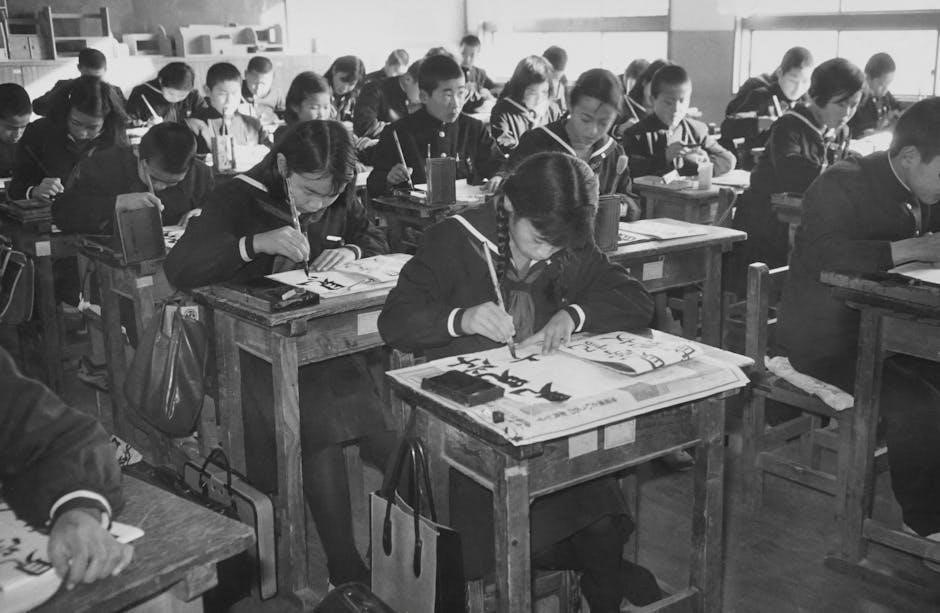
Successful implementation of 5-minute warm-ups, often detailed in PDF resources, hinges on tailoring activities to suit the developmental stage of students. What captivates a high school class will likely differ significantly from what engages elementary learners. For younger children, movement-based warm-ups or simple picture prompt discussions are ideal, fostering participation through kinesthetic and visual learning.

Conversely, older students benefit from more cognitively challenging activities like mini-debates or complex brain teasers. Adjusting the complexity of prompts and the expected level of response is key. Consider scaffolding activities – providing more support for younger learners and gradually reducing it as students mature. Many downloadable activity guides offer variations for different age groups, ensuring inclusivity and maximizing engagement across the classroom.
Using Warm-Ups for New Students
Integrating 5-minute warm-ups, readily available in PDF formats, is particularly beneficial for new students, easing their transition into the classroom environment. Activities like “Two Truths and a Lie” or simple pair-and-share exercises are excellent icebreakers, encouraging interaction and fostering a sense of belonging. These low-stakes activities reduce anxiety and allow students to learn names and build initial connections.
Focus on warm-ups that require minimal prior knowledge and emphasize participation over correct answers. Name games and quick introductions can help students and the teacher learn each other’s names. Creating a welcoming and inclusive atmosphere from the outset is crucial. Warm-ups provide a safe space for new students to contribute and feel valued, setting a positive tone for their learning journey.

Resources for Finding Warm-Up Ideas
Numerous online databases and PDF resources offer a wealth of 5-minute activities. Books and articles also provide engaging ideas for student participation.
Online Databases of Classroom Activities
A plethora of websites curate collections of classroom warm-up activities, many available as downloadable PDFs. These online databases are invaluable resources for teachers seeking fresh and engaging ideas to kickstart their lessons. Several platforms specialize in short, 5-minute activities designed to energize students and focus their attention.
Teachers can find resources categorized by subject, age group, and activity type, streamlining the search process. Some databases offer user-submitted content, fostering a collaborative community of educators sharing best practices. These sites frequently include filters to refine searches based on specific learning objectives or classroom needs. The availability of PDF formats allows for easy printing and offline access, ensuring teachers are prepared even without a reliable internet connection. Exploring these online hubs provides a continuous stream of inspiration for dynamic and effective warm-ups.
PDF Resources for Printable Warm-Ups
Numerous websites offer readily available PDF documents specifically designed for quick, printable classroom warm-ups. These resources are incredibly convenient, allowing teachers to easily download and implement activities without extensive preparation. Many PDFs contain multiple activities on a single page, maximizing efficiency and minimizing paper usage.
The format is particularly useful for stations or small group work, providing students with independent tasks during the initial 5-minute period. These printable warm-ups often include brain teasers, quick writing prompts, or simple challenges. Searching online for “5-minute classroom warm-up PDF” yields a wealth of options, catering to diverse age groups and subject areas. Utilizing these resources saves valuable time and ensures a consistent supply of engaging activities to begin each lesson effectively.
Books and Articles on Engaging Students
Beyond readily available PDFs, a wealth of educational literature explores strategies for maximizing student engagement, including the effective use of warm-up activities. Books dedicated to classroom management and instructional design often devote chapters to establishing positive learning routines, emphasizing the importance of the first 5 minutes of class.
Articles in educational journals frequently highlight innovative techniques for capturing student attention and fostering a collaborative learning environment. These resources often provide theoretical frameworks supporting the use of warm-ups, explaining how they activate prior knowledge and prepare students for new concepts. Researching topics like “active learning strategies” or “student engagement techniques” can uncover valuable insights and inspire creative warm-up ideas, supplementing readily available PDF resources.

Troubleshooting Common Issues
If activities lack engagement, adapt them! Time management is key; ensure warm-ups remain within the 5-minute timeframe, as detailed in PDF guides.
Activities That Don’t Engage Students
Identifying why a 5-minute warm-up falls flat is vital. Often, the issue stems from complexity – activities should be instantly accessible, requiring minimal prior knowledge. PDF resources highlight the importance of variety; repeating the same type of warm-up breeds boredom. Consider student age and interests; a riddle captivating one class might flop with another.
Furthermore, ensure clear instructions. Ambiguity leads to confusion and disengagement. If students are unsure what to do, they’ll quickly lose interest. Observe student reactions; are they passively participating or genuinely engaged? If it’s the former, it’s time for a change. Don’t be afraid to abandon an activity mid-way if it’s not working. Adaptability is crucial. Sometimes, a simple tweak – like adding a competitive element or changing the format – can revitalize a struggling warm-up. Remember, the goal is to energize and focus, not frustrate.
Managing Time Effectively
Strict time management is paramount for 5-minute warm-ups. Many PDF guides emphasize a clear start and stop signal. Begin promptly at the designated time, and adhere to the 3-5 minute window. Overrunning cuts into valuable lesson time, while rushing feels chaotic. Prepare materials beforehand to avoid delays. Have instructions readily available, and practice the activity yourself to gauge its duration.
Consider a timer visible to both you and the students. This promotes awareness and accountability. If an activity consistently exceeds the time limit, simplify it or choose a different one. Don’t be afraid to cut an activity short if it’s dragging on. A concise, impactful warm-up is far more effective than a lengthy, rambling one. Prioritize focused engagement over completing every step.